

APA FPC-Remote Exam Dumps FAQs
1. What is the APA FPC-Remote Exam?
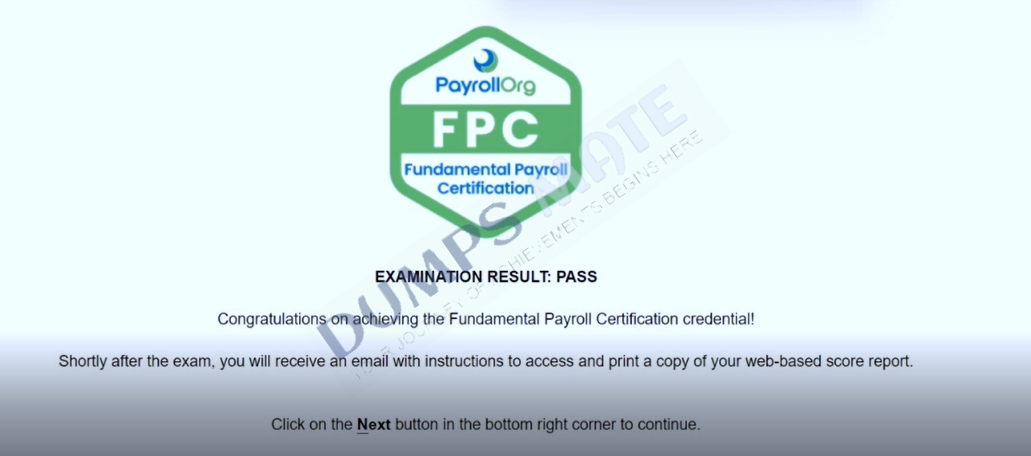
The APA FPC-Remote Exam is the Fundamental Payroll Certification exam offered by the American Payroll Association (APA). It validates entry-level payroll knowledge and can be taken remotely through Pearson VUE’s online proctoring system.
2. Who should take the FPC-Remote Exam?
The APA FPC-Remote exam is ideal for payroll specialists, HR professionals, accountants, and anyone seeking to demonstrate foundational payroll knowledge without prior certification requirements.
3. What topics are covered in the APA FPC-Remote Exam?
The FPC-Remote exam covers:
-
Core Payroll Concepts (29%) – Worker status, FLSA, employment taxes, employee benefits, forms, professional responsibility
-
Compliance/Research and Resources (17%) – Legislative requirements, reporting, record retention, penalties
-
Calculation of the Paycheck (24%) – Compensation, benefits, deductions, employer taxes, total payroll
-
Payroll Process and Systems (7%) – Payroll administration, supporting systems
4. How many questions are in the FPC-Remote Exam?
The APA FPC-Remote exam includes 150 multiple-choice questions, of which 25 are unscored pretest questions.
5. How long is the FPC-Remote Exam duration?
Candidates have 3 hours to complete the APA FPC-Remote exam.
6. What is the difference between the APA FPC-Remote and CPP-Remote?
The APA FPC-Remote Exam is an entry-level payroll certification with no prerequisites, while the APA CPP-Remote Exam is an advanced certification for experienced payroll professionals that requires meeting strict eligibility criteria.
7. How can DumpsMate help prepare for the FPC-Remote Exam?
DumpsMate offers APA FPC-Remote exam dumps, real questions, PDF study guides, and practice questions with detailed explanations. Our testing engine simulates the real exam environment, ensuring candidates are fully prepared.
8. How long is the FPC certification valid?
The Fundamental Payroll Certification is valid for 3 years. After that, professionals must requalify to maintain their credential.