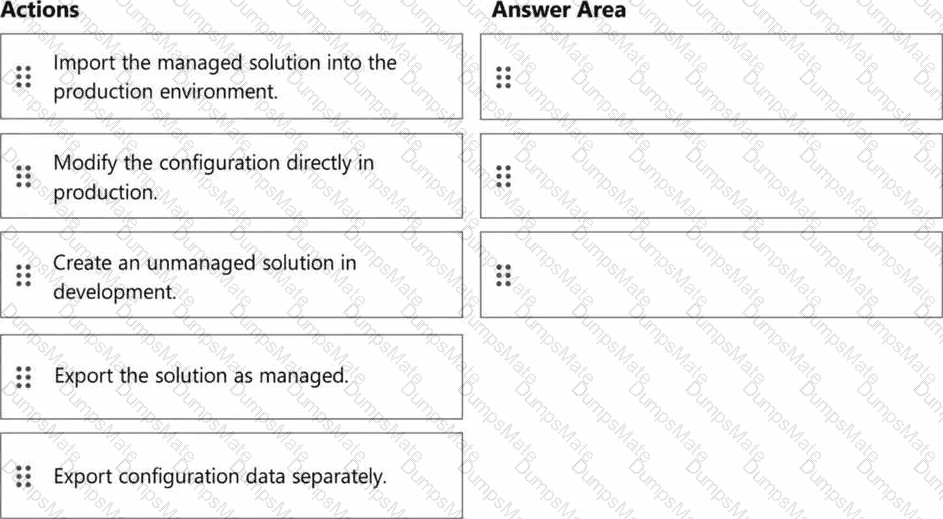
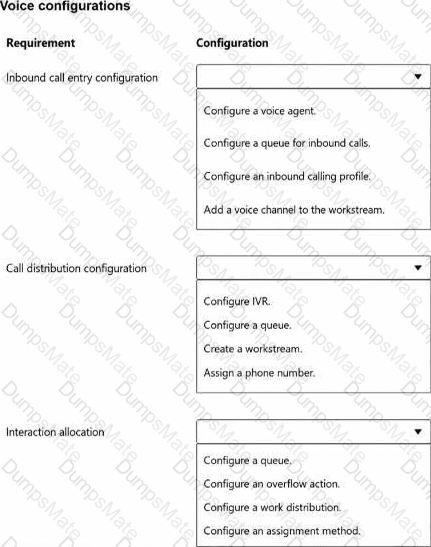
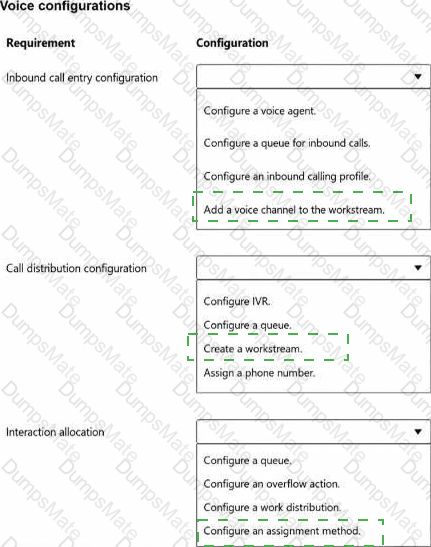
Inbound call entry configuration - > Add a voice channel to the workstream.
Call distribution configuration - > Create a workstream.
Interaction allocation - > Configure an assignment method.
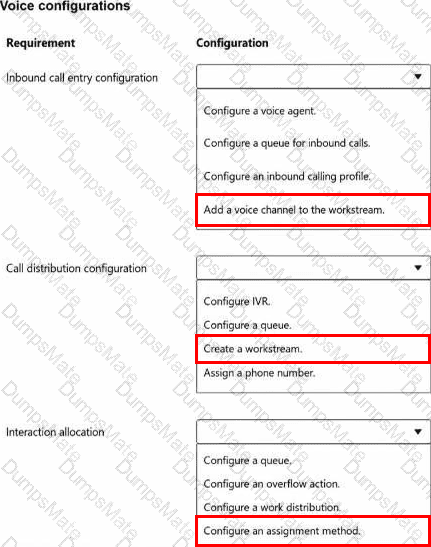
Inbound voice routing in Dynamics 365 Contact Center is built around a voice workstream. Microsoft defines a workstream as the container that enriches, routes, and assigns work items and specifically requires a Voice workstream for inbound voice configuration.
The voice channel is then associated with that workstream by configuring the phone number and channel settings. This establishes the inbound entry point through which the call enters the Contact Center routing pipeline. Microsoft documents configuring the voice channel from the workstream and associating an inbound-enabled phone number with it.
Once a call is classified and routed to a queue, the assignment method controls which eligible representative receives the work item. Assignment methods can evaluate representative capacity, skills, presence, and configured selection criteria. Microsoft provides standard methods such as Highest capacity and Least active, as well as configurable custom assignment rules.
A queue provides a routing destination but does not by itself determine which representative receives the interaction. Therefore, the workstream/channel establishes call entry and distribution architecture, while the assignment method performs representative allocation.
Study Guide reference: Implement channels / Configure work distribution - > Configure inbound voice, workstreams, queues, and assignment methods.