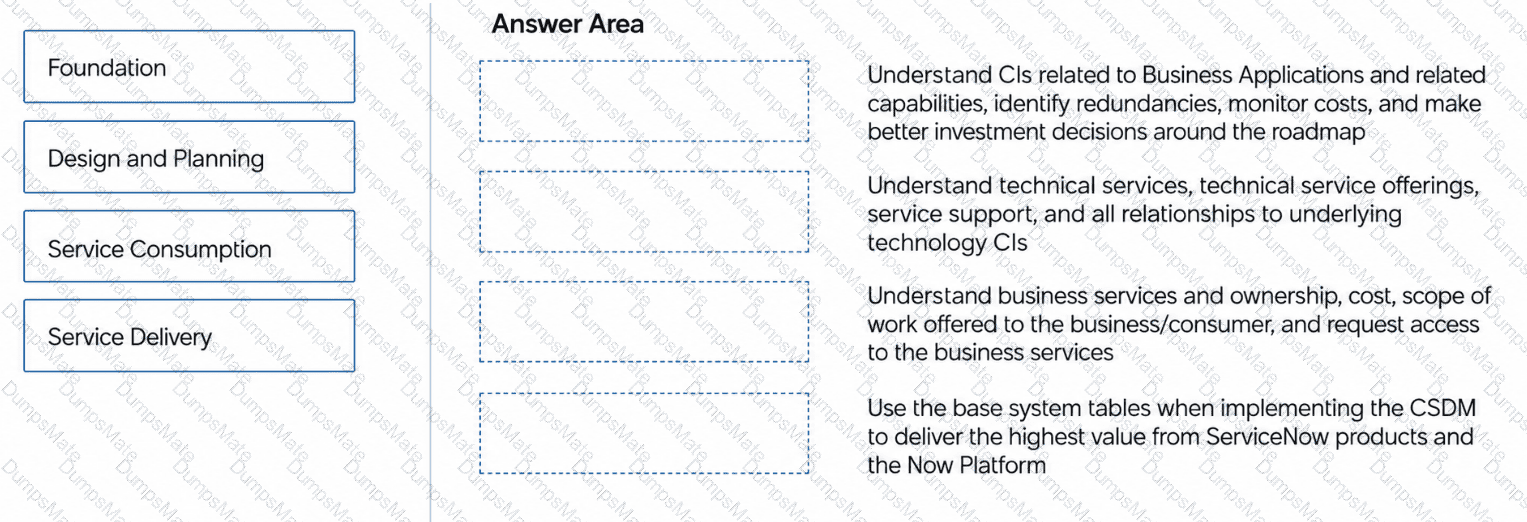
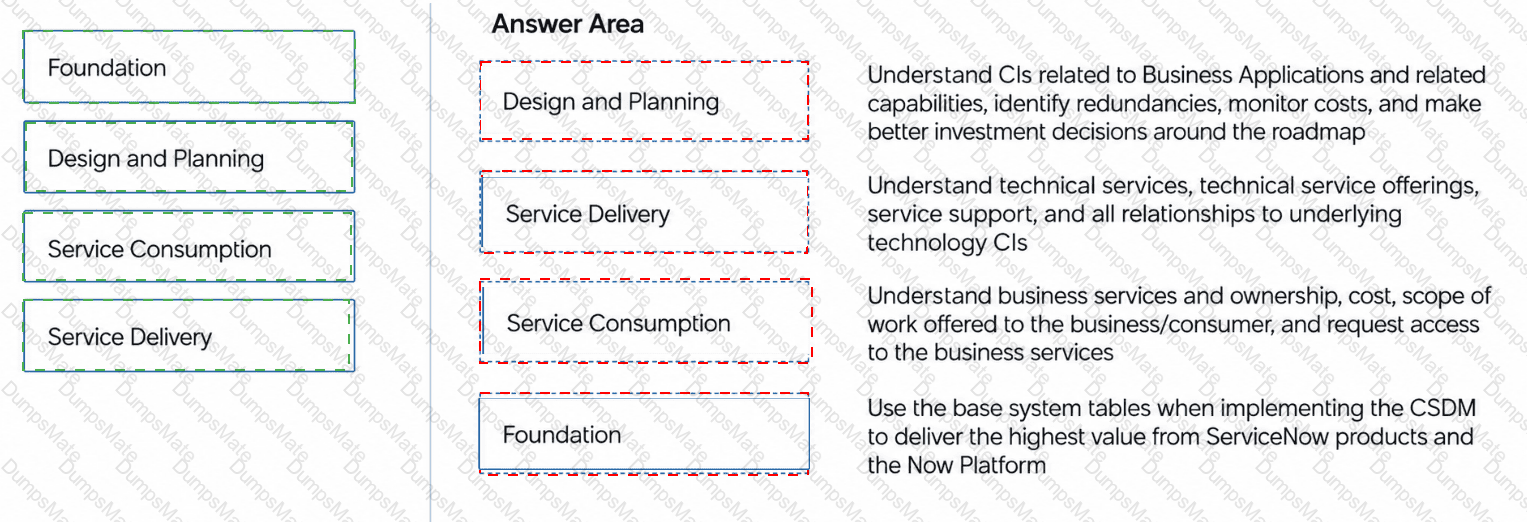
The Common Service Data Model (CSDM) prescribes an incremental, maturity-based rollout approach to reduce risk and ensure sustainable adoption. The recommended order is Crawl, Walk, Run, Fly, which aligns implementation effort with increasing organizational capability and value realization.
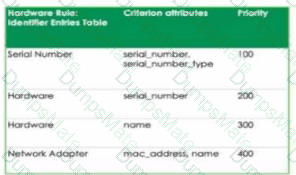
Crawl focuses on foundational data hygiene: core CI classes, identification rules, reconciliation, basic Discovery ingestion, and CMDB Health basics.
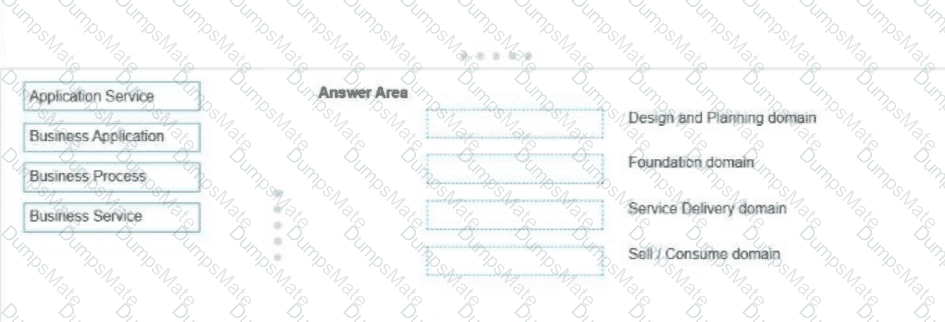
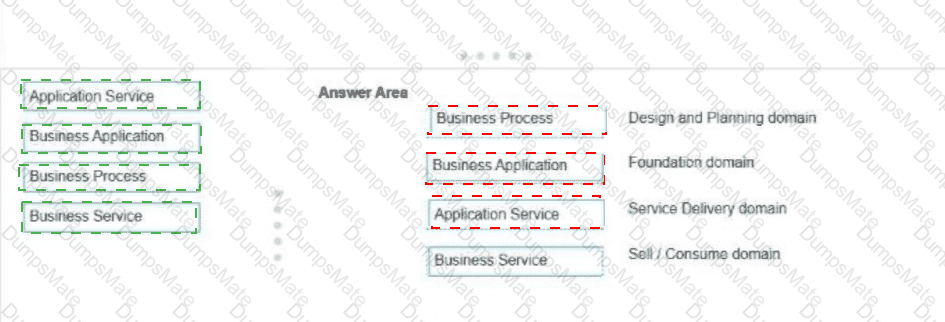
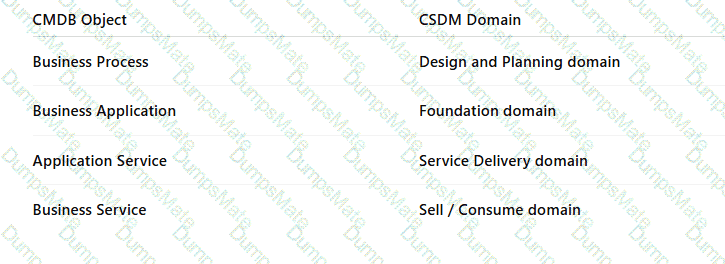
Walk introduces service context, including Business Services, Application Services, and relationships that enable impact analysis for Incident and Change.
Run expands into operational excellence with Service Mapping, service offerings, advanced governance, and process automation.
Fly represents optimization and scale, leveraging analytics, AI/ML, proactive operations, and cross-domain integration (e.g., SecOps, APM, CSM).
This progression ensures teams do not over-model early or introduce complexity before data quality and governance are established. The other options describe generic project lifecycles or organizational categorizations, not the CSDM-recommended adoption path.
Therefore, the correct answer is D – Crawl, Walk, Run, Fly.