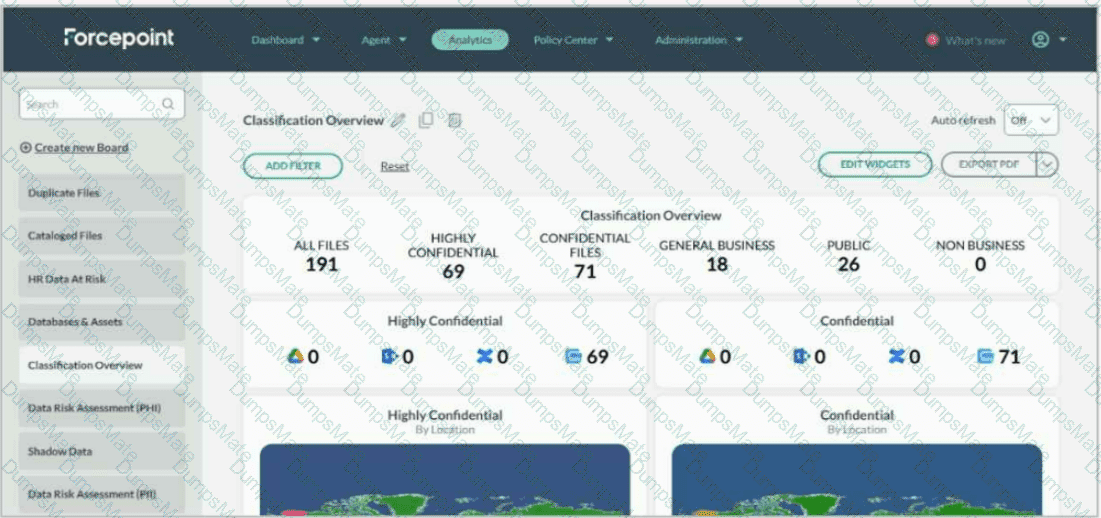
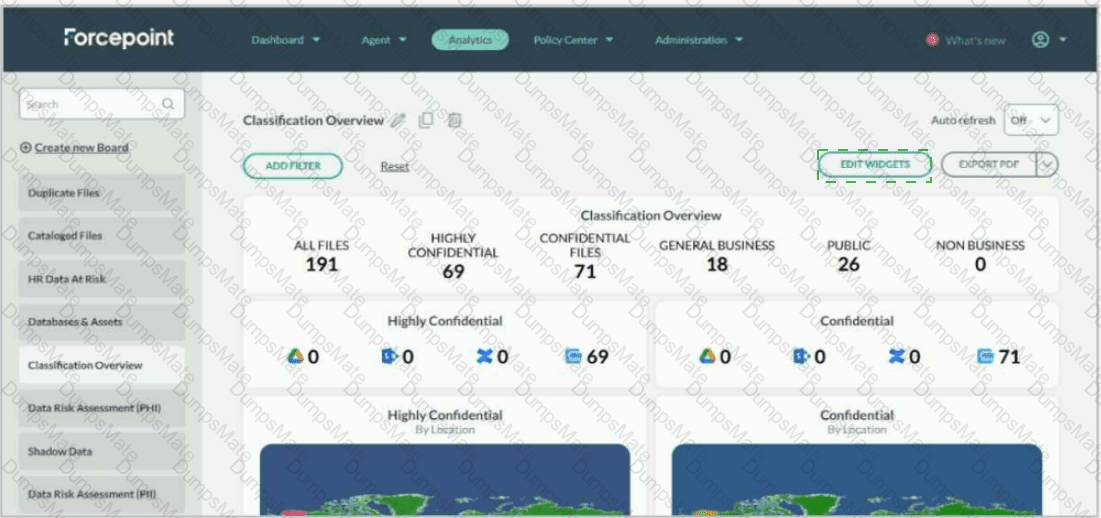
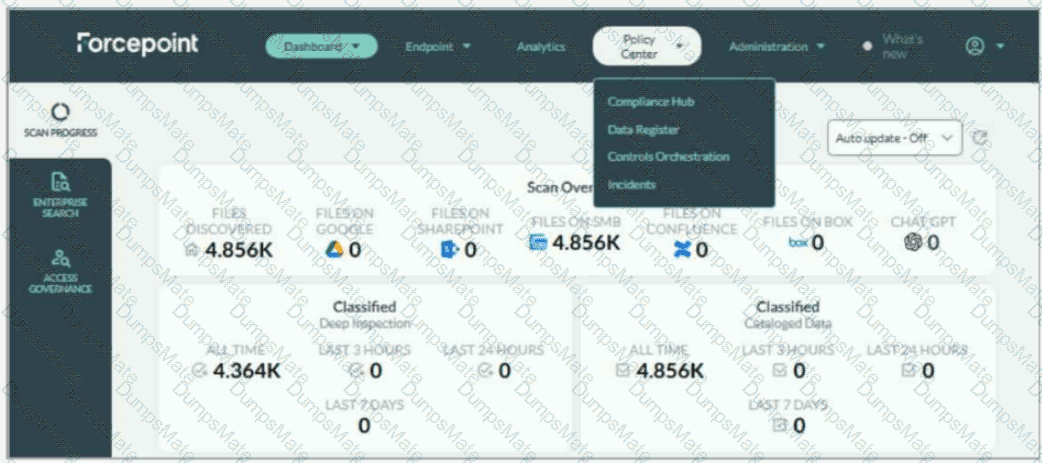
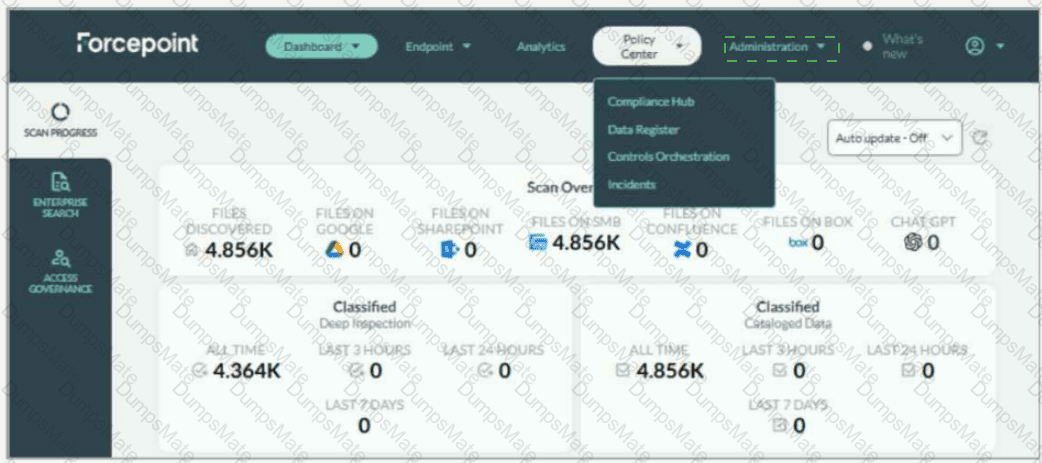
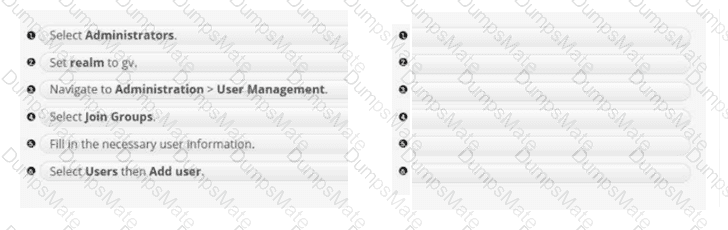
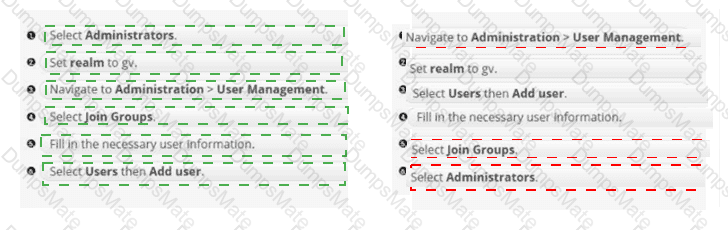
The correct selections are A, C, D, and E . A data classification and handling policy is a governance artifact that defines how data assets are categorized, owned, protected, reviewed, and aligned to legal or regulatory requirements. In Forcepoint DSPM, this sits within Policy Center and Compliance Hub , which are designed to support data classification, policy creation, security-control implementation, compliance, and risk reduction. Forcepoint states that Policy Center streamlines policy creation and prompts organizational representatives to provide information needed to build a governance framework aligned to organizational goals.
Specifying asset requirements maps to Data Mapping, where organizations define Data Asset Inventory fields and metadata such as retention period, business owner, regulatory scope, review status, and project name. Incorporating industry-specific regulations is required because departmental policy design must reflect obligations such as GDPR, HIPAA, and PCI DSS. Defining classification levels aligns to Taxonomy, where sensitivity levels such as Confidential, General Business, Public, and Highly Confidential are configured. Outlining roles and responsibilities aligns to assigning policy owners, department heads, representatives, and accountable stakeholders. Network traffic protocols are not a core step in creating a data classification and handling policy; they belong to network architecture or transport-control design, not data governance policy creation.