Service Model
Description
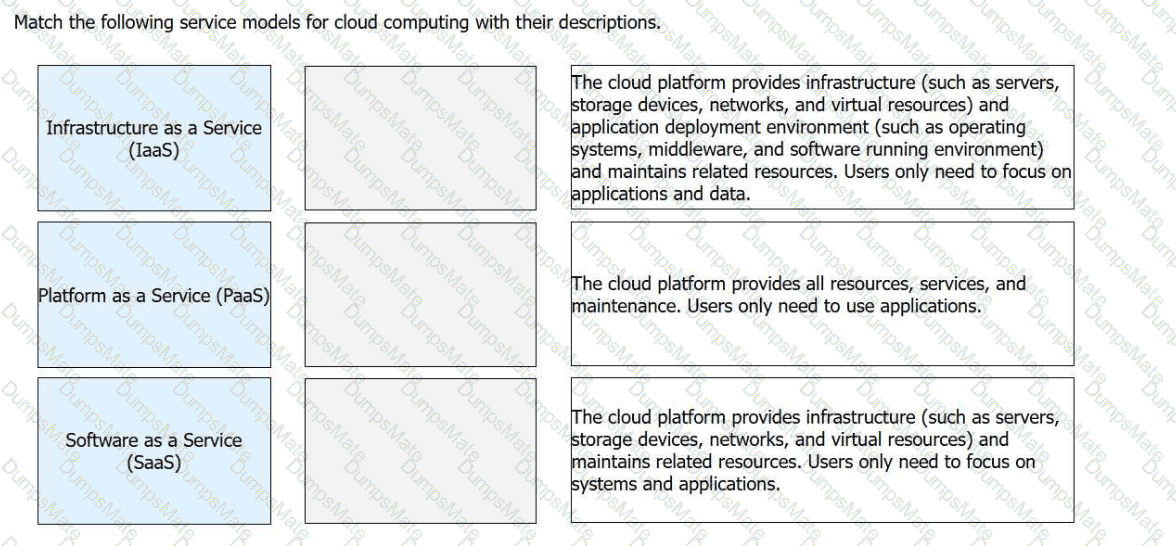
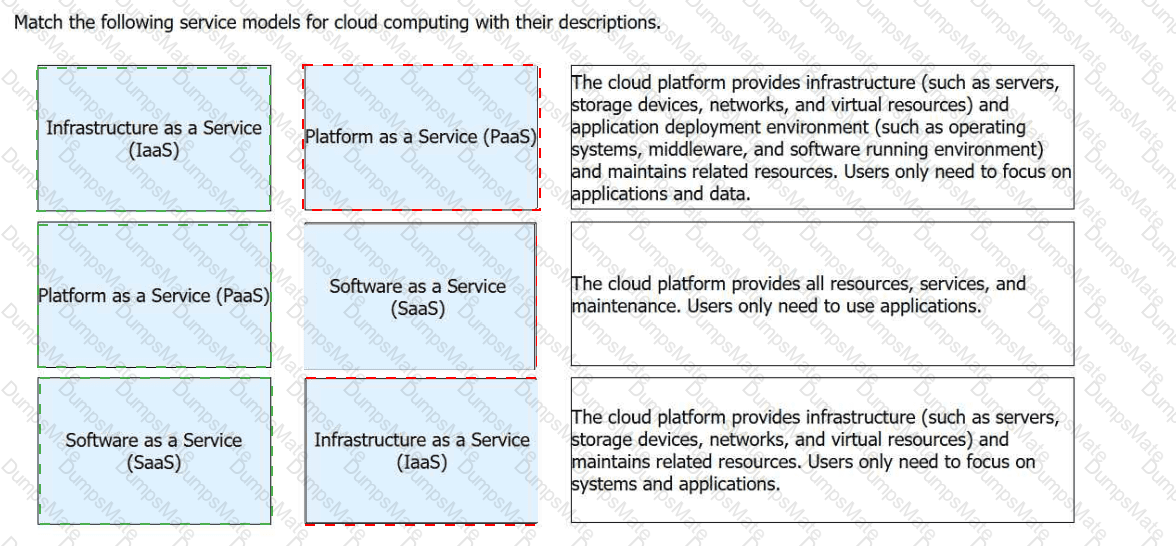
Infrastructure as a Service (IaaS)
The cloud platform provides infrastructure (such as servers, storage devices, networks, and virtual resources) and maintains related resources. Users only need to focus on systems and applications.
Platform as a Service (PaaS)
The cloud platform provides infrastructure (such as servers, storage devices, networks, and virtual resources) and application deployment environment (such as operating systems, middleware, and software running environment) and maintains related resources. Users only need to focus on applications and data.
Software as a Service (SaaS)
The cloud platform provides all resources, services, and maintenance. Users only need to use applications.
According to the official Huawei HCIA-Cloud Computing curriculum, cloud services are categorized into three standard models:IaaS, PaaS, and SaaS, distinguished by the boundary of responsibility between the provider and the user.
In theIaaS(Infrastructure as a Service) model, the provider is responsible for the physical and virtualized hardware resources, including compute, networking, and storage. The user retains control over the "system" level, meaning they must install and manage the operating system, middleware, and applications. This model offers the highest level of flexibility and is the foundation for Huawei's FusionCompute services.
PaaS(Platform as a Service) moves the boundary higher. The cloud platform provides not only the infrastructure but also the entire development and deployment environment. This includes the operating system, database management systems, and middleware. The user is relieved of system maintenance and only needs to focus on the "applications and data" layer. This model is ideal for developers who want to deploy software without managing the underlying server stack.
Finally,SaaS(Software as a Service) represents the highest level of abstraction. The provider manages the entire stack, from hardware to the application itself. Users simply access and "use the application" via a web browser or client. The user has no responsibility for maintenance, updates, or infrastructure scaling. Understanding these models is critical for the HCIA exam as it defines how Huawei Cloud Stack delivers different value propositions to enterprise customers.