Conversation transcript between the customer and the product owner (PO):
Customer: I am requesting a calendar feature for scheduling and reminding of upcoming releases that we can manage. We also need the calendar to indicate quarterly metrics deadlines, code freeze dates for financial close, and things like that.
PO: My understanding is that this is for tracking project deadlines. Would you need to see the project deadlines on your phone calendar?
Customer: Yes. I need to see a single snapshot on my phone. So, is it possible for me to connect my phone to this calendar app?
PO: Let me write up the requirements and get the development team on board with the deadlines. What phone do you own?
Customer: I own an Android phone, but I also need integration with the Apple phones.
Identify three minimum viable product (MVP) items. (Refer to Conversation transcript between the customer and the product owner (PO). Choose three.)

 Rapid feedback: Getting feedback quickly from customers or stakeholders to ensure that the development process is on track.
 Assume simplicity: Focusing on simplicity in the design and code to avoid overengineering and to ensure the software is easy to understand and modify.
 Incremental change: Delivering software in small, manageable increments that can be easily adjusted based on feedback.
 Embrace change: Being flexible and adaptable, especially in response to new requirements or changes in technology or business needs.
 Quality work: Ensuring high-quality software by emphasizing practices such as automated testing, continuous integration, and refactoring.
 Unit testing ensures the code works as expected.
 Meeting the acceptance criteria ensures that the business needs are met.
 Business testing and functional testing confirm the product works from both the business and technical perspectives.
 Code merging ensures that the feature is integrated into the main branch.
 Updating documentation ensures that the product is well-documented for future reference and use.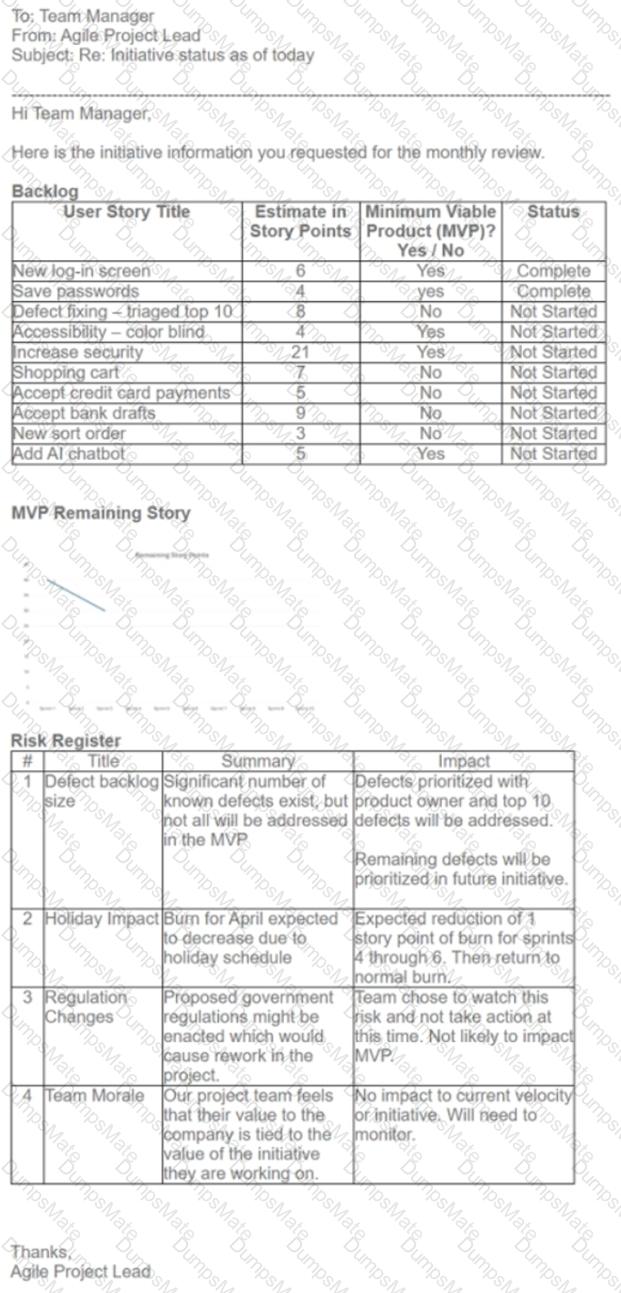
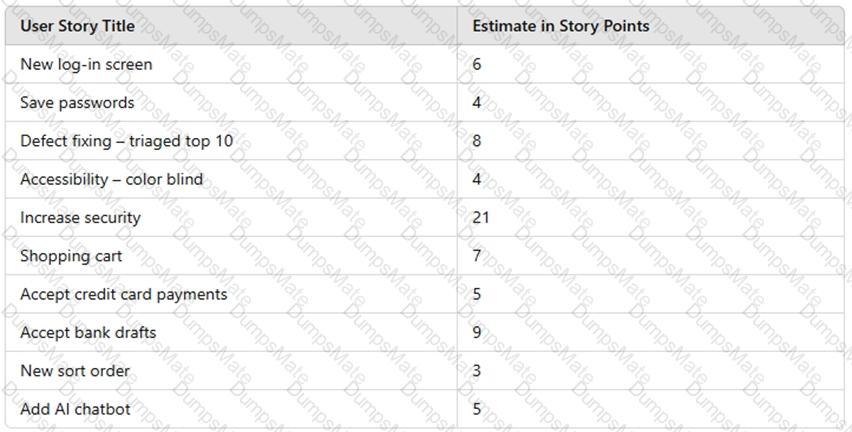
 Accessibility – color blind → 4 story points
 Increase security → 21 story points
 Add AI chatbot → 5 story points
 The risk register mentions a reduction of 1 story point per sprint from sprints 4 through 6 due to the holiday schedule.
 If we assume the team ' s normal velocity is 10 story points per sprint (hypothetically), it would drop to 9 story points per sprint for sprints 4-6.
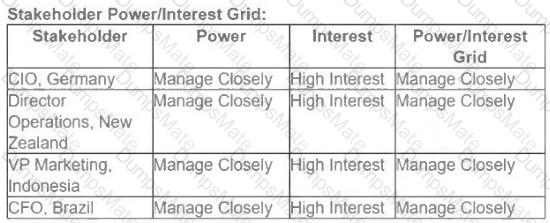
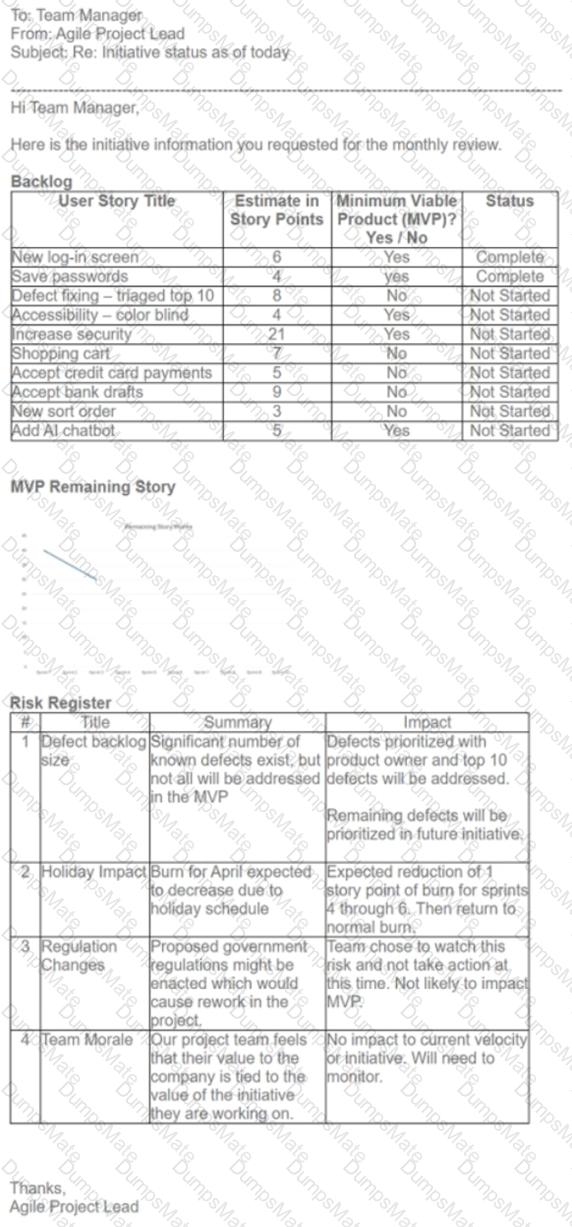
 Normal sprint velocity: 5 story points per sprint
 Reduced velocity for sprints 4-6: 4 story points per sprint
 First 3 sprints: 5 points per sprint → 5 × 3 = 15 story points completed
 Sprints 4-6: 4 points per sprint → 4 × 3 = 12 story points completed
 Remaining story points after sprint 6: 72 - (15 + 12) = 45 story points
 Remaining sprints needed at normal velocity (5 story points per sprint): 45 ÷ 5 = 9 sprints
 Sprints 1-6: Already planned.
 Additional 9 sprints needed.